
Grey-on-Grey Rooms: Are Matching Walls and Ceilings Chic—or Too Much?
January 23, 2026
A Fresh Coat, A Fresh Welcome: Exterior Painting in Frederick, MD
February 17, 2026
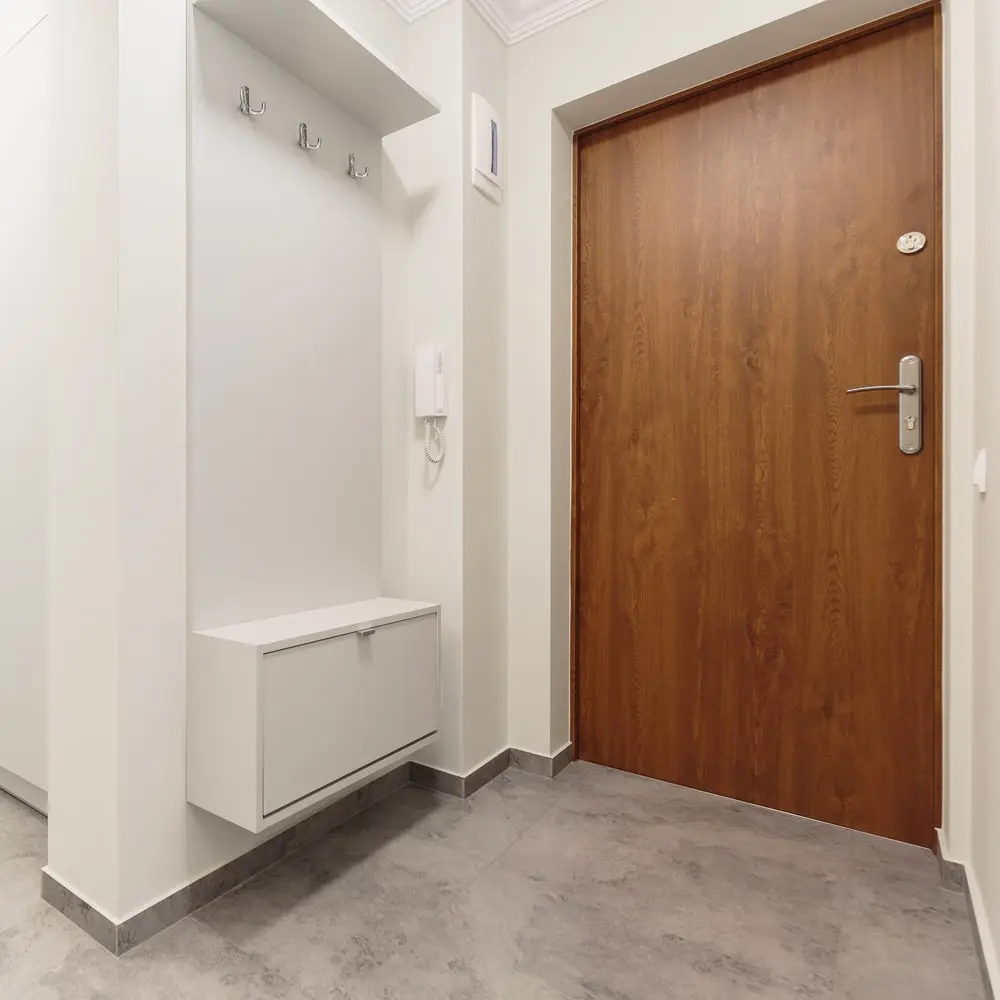
Your front door is small in size but huge in impact. A smart, well-planned Frederick door painting project can lift curb appeal, protect against Maryland weather, and set the tone for every guest who steps inside. In this guide, you’ll get a clear plan—from surface prep to maintenance—so your finish looks sharp and lasts.
Why Door Painting Matters More Than You Think
A freshly painted door does three big jobs:
-
Protects against sun, moisture, and everyday wear
-
Elevates curb appeal with color and sheen
-
Signals quality throughout the home
When it’s done right, the finish holds up through hot summers, winter chills, and humid swings common in Maryland.
Quick Signs It’s Time to Repaint
-
Faded color or dull sheen
-
Light chalking you can rub off with a finger
-
Hairline cracks, peeling, or bubbling
-
Swollen edges or sticking after rainy days
-
Rust at hinges or kick plate (on metal doors)
If you’re seeing two or more of these, plan a Frederick door painting refresh soon—before small issues spread.
The Right Paint (and Sheen) for Doors
Choosing the right coating is half the battle.
-
Paint type
-
Acrylic latex for most exterior doors: flexible, easy to clean, durable in temperature swings
-
Alkyd-modified waterborne options: smoother leveling, harder film, faster recoat
-
Oil-based (select cases): traditional hardness; use where local rules and substrate needs allow
-
-
Sheen
-
Satin: hides minor flaws, soft glow
-
Semi-gloss: classic door look, stronger wipe-clean properties
-
Gloss: bold and formal; requires a very smooth base
-
Tip: Color affects performance. Deep, dark colors can run hotter in sun. If you love dark tones, choose heat-resistant formulations and a quality primer.
Color Made Easy (That Still Looks Elevated)
Aim for harmony with your siding, trim, and roof. Three fast routes:
-
Classic contrast: White or light trim with a deep navy or charcoal door
-
Warm welcome: Earth-tone siding with rich red or burnt copper
-
Fresh modern: Gray siding with teal, black, or soft green
Test swatches on the actual door. Check morning shade, midday sun, and evening light. A color that looks great at noon may read cooler at dusk.
Prep Is Everything
Minimal prep leads to short-lived results. Great prep gives you a tight, durable film.
-
Remove hardware or mask thoroughly
-
Clean: mild detergent + water, rinse well, dry completely
-
Scuff sand glossy areas (120–150 grit) for tooth
-
Fill small dings with exterior filler; let cure, sand smooth
-
Spot prime bare wood/metal; for color changes or stubborn stains, prime entire door
-
Caulk gaps at trim/brickmold with paintable exterior sealant
-
Final wipe-down to remove dust
Pro Painting Sequence
-
Door on hinges or off? Staying on hinges is fine for many projects. Removing can help with edges and dust.
-
Cut in panels and edges first with a quality angled brush.
-
Roll flats with a 4–6″ high-density foam roller for a smooth lay-down.
-
Tip off (light brush pass) to level roller texture.
-
Dry fully, light sand (220 grit), and apply the second coat.
-
Cure time: keep hands off for a few hours; avoid weatherstripping contact until fully dry.
For a deeper dive into residential finishes, see our page on door painting—it covers approach, materials, and scheduling.
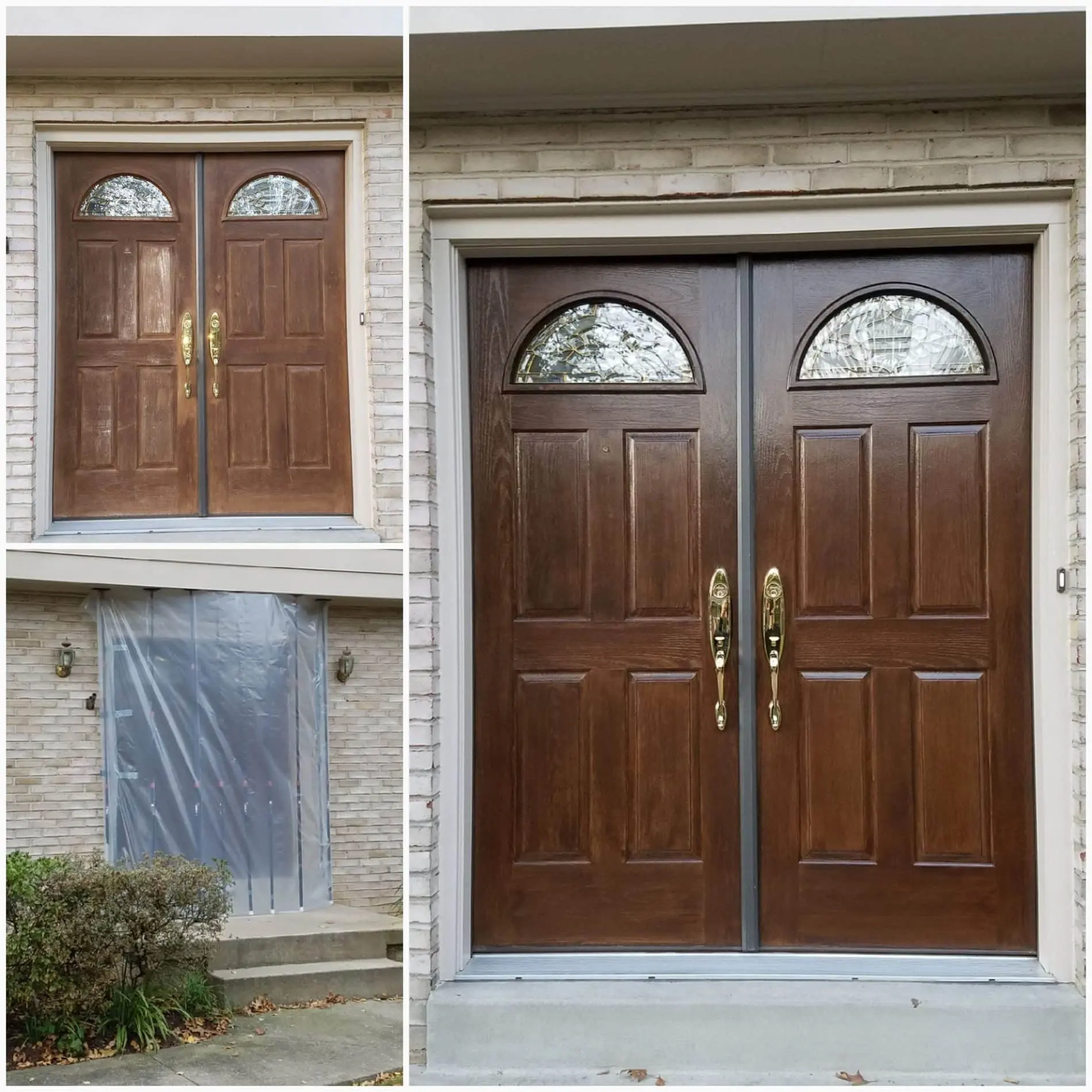
Timing for Maryland Weather
-
Spring & Fall: Sweet spots—mild temps, lower humidity
-
Summer: Paint early or late day to avoid heat blisters; watch direct sun on dark colors
-
Winter: Select products rated for low-temp application and allow longer dry times
Aim for stable conditions throughout application and early cure.
Door Material: Tailor Your Approach
Wood doors
-
Check for hairline cracks, end-grain absorption, and old putty failure.
-
Prime bare spots; consider a stain-blocking primer if tannins are present.
-
Keep edges sealed to prevent moisture wicking.
Fiberglass doors
-
Wash, then light scuff for adhesion.
-
Use manufacturer-approved primers and topcoats.
-
Avoid heavy sanding that can fuzz the skin.
Steel doors
-
Address any rust with a rust converter or sand to bright metal, then prime with a rust-inhibitive primer.
-
Choose a hard-wearing enamel topcoat.
-
Watch for thermal expansion on dark colors in full sun.
Hardware & Trim: Small Details, Big Payoff
-
Replace worn weatherstripping for a cleaner seal
-
Polish or update handlesets for a crisp look
-
Refresh sidelights and transoms to complete the entry
-
Seal the threshold; tidy up kick plates or consider a new one
These touches make the new paint job feel finished and premium.
Prep vs. Paint: Where Time Really Goes
Most projects break down like this:
-
60–70% prep (clean, sand, fill, prime)
-
30–40% paint and cure
That’s why a professional plan saves time—and why skipping steps shortens the life of your finish.
Cost Factors
-
Door style (flat slab vs. multi-panel with glass)
-
Material (wood, fiberglass, steel)
-
Hardware removal/reinstall complexity
-
Primer needs (spot prime vs. full prime)
-
Repair scope (dents, cracks, rust treatment)
-
Product tier and sheen
Quality materials and tight prep reduce repaints and touchups down the road.
DIY or Pro? A Quick Decision Grid
Choose DIY if:
-
You have a dust-free workspace and a free weekend
-
You’re comfortable removing hardware and masking
-
You can manage light sanding, priming, and multiple thin coats
Choose a pro if:
-
Your door shows peeling, rust, or moisture intrusion
-
You want a glass-smooth finish with minimal texture
-
Scheduling, cleanup, and warranty matter to you
Ready for a professional result with careful prep and a smooth finish? Explore Frederick door painting to see how we handle it step by step.
Key Benefits of Professional Door Painting (Table)
| Benefit | What it means | Why it matters in Frederick |
|---|---|---|
| Protection | Seals wood/metal from moisture and sun | Handles humidity swings and summer heat |
| Durability | Hard, washable film resists scuffs | Withstands high-traffic entryways |
| Curb Appeal | Crisp color + clean edges | Boosts first impressions immediately |
| Smooth Finish | Leveled coats and minimal texture | Looks refined up close and from the street |
| Faster Turnaround | Efficient prep, dry, and rehang | Door back in service quickly |
Maintenance: Keep That Finish Looking New
-
Wash seasonally with mild soap and soft cloth
-
Avoid harsh abrasives that dull sheen
-
Touch up scuffs before moisture gets in
-
Check caulk lines annually around brickmold and trim
-
Lubricate hinges after painting to prevent squeaks and wear
These simple steps stretch the life of your Frederick door painting investment.
Common Mistakes
-
Painting in direct sun: Work in shade or off-peak hours
-
Heavy coats: Go thin, even, and build coverage
-
Skipping primer: Especially risky over bare wood/metal or big color changes
-
Ignoring edges: Unsealed edges invite moisture
-
Rushing rehang: Let paint cure; protect new film from weatherstripping
A Simple, Proven 1–Day Flow
Morning: Clean, sand, mask, prime
Midday: First coat; level and let dry
Afternoon: Light sand; second coat
Evening: Gentle rehang; hardware on after safe dry window
Complex doors or repairs can add time, but this sequence keeps things moving smoothly.
When You’re Matching Trim or Shutters
Bring a sample of your trim color—or snap a close, daylight photo. We’ll help align hue, saturation, and sheen so the entry feels cohesive. If you’re setting a new accent color, we’ll balance it with siding and roof undertones.
What About Interior Doors?
While this guide focuses on exteriors, many of the same rules apply inside: clean, sand, and choose the right sheen for traffic. For interior entries that get sunlight, UV exposure can still fade color—choose lightfast pigments and keep coats even.
Service Area Note
This guide is created for homeowners in Frederick, Washington, Carroll, Howard, and Upper Montgomery Counties in Maryland. Climate patterns and building materials here inform the prep steps and coating choices we recommend.
Ready to Refresh Your Entry?
If you want a strong, durable finish and a color that truly pops, our team can handle everything—from careful prep to that flawless final coat. Learn more about door painting and schedule a visit.
FAQs
1) How long does a freshly painted exterior door take to dry?
Most waterborne enamels are dry to touch in 1–2 hours and ready for a second coat in 4–6 hours (product-dependent). Let the finish cure longer before heavy use.
2) Should I remove the door to paint it?
Not always. Many doors can be painted in place with careful masking and edge work. Removing helps with full-edge sealing and dust control on complex doors.
3) What sheen is best for front doors?
Semi-gloss is the classic choice for cleanability and a polished look. Satin works well when you want a softer glow or need to hide minor surface flaws.
4) How often should I repaint a front door?
Every 3–7 years depending on sun exposure, color depth, and maintenance. South-facing, dark-color doors usually need attention sooner.
5) Can you paint over oil if I don’t know what’s on there now?
Yes—after a clean and scuff sand, use a bonding primer suited for going over old oil. Then apply your chosen waterborne enamel or hybrid finish.

Shawn Zimmerman started painting in the summer of 1991, the year before he graduated high school. Shawn decided to pursue his career in the family business and continued to develop his skills in the trade while also developing the necessary skills to manage the business. Shawn enjoys being outdoors, canoeing, camping, hiking, hunting, fishing and spending time with family.