Fumes, Dry Time, Kids & Pets: Can You Stay Home While Painting?
January 16, 2026
Flawless Walls in Frederick: Drywall Repair That Stays Invisible
February 3, 2026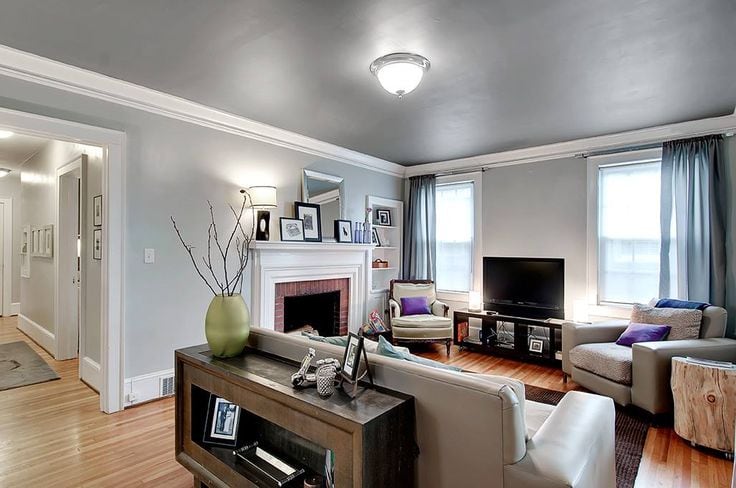
Grey is versatile, calm, and modern. But when you take it all the way—grey walls and ceiling same color—is the look designer-level chic or a shortcut to a heavy, cave-like room? The answer depends on undertone, light, height, sheen, and how you style the space. Below, you’ll find a practical guide for getting this choice right, plus room-by-room tips and easy tests before you commit.
For more context on matching ceilings and walls, see our related post: Should You Paint Your Ceilings the same color as the walls?
The Big Idea: Edge Removal vs. Edge Definition
A contrasting white ceiling acts like a frame—it draws a line that clearly ends the wall. When you paint the ceiling and walls the same grey, you remove that edge. Corners soften, planes feel continuous, and the eye stops hunting for the “top” of the room. That can read as upscale minimalism—or, without the right conditions, as flat and dim.
You’ll love grey-on-grey if you want:
- A seamless, cocoon-like vibe
- Clean lines in modern spaces
- Architecture with lots of angles to feel unified
You may prefer contrast if you need:
- Extra height and lift in small or low rooms
- Maximum brightness in dim, north-facing spaces
- Historic trim to read crisp and sculptural
Undertones: The Detail That Makes or Breaks It
Greys always lean toward one of four hues: warm (brown/taupe), cool (blue), green, or purple. Those subtle shifts explode across a large, continuous envelope—especially on the ceiling.
- Warm greys (greige/taupe): Cozy and forgiving; great for family spaces and rooms with wood floors.
- Blue-leaning greys: Clean and modern; can feel chilly in rooms with cool daylight.
- Green-leaning greys: Calm and natural; lovely with plants, stone, and oak.
- Purple-leaning greys: Sophisticated but tricky—watch them in evening lamplight.
How to test quickly: Paint large swatches on two walls (one bright, one shaded), then roll a sample board and hold it flat against the ceiling. Check morning, midday, and evening, and under your actual bulbs.
Light & Height: When Grey-on-Grey Feels Airy vs. Heavy
Room height
- 8’–8’6″ ceilings: Choose light to light–mid greys to avoid compression.
- 9’+ ceilings: You have freedom to go mid to deep without losing lift.
Natural light
- North-facing: Greys read cooler and darker—use warm-leaning light greys and keep sheen gentle.
- South-facing: Greys warm up; you can step slightly cooler or darker.
- East/West: Expect shifts; east is fresh in the morning, west glows late day. Sample accordingly.
Artificial light
- 2700–3000K bulbs: Softer, warmer; reduce harshness in cool greys.
- 3500–4000K bulbs: Crisp and modern; can emphasize blue undertones.
- Layer ambient, task, and accent so a one-color envelope doesn’t read dull.
Sheen Strategy: Same Color, Different Behavior
- Ceiling: Flat/matte finish hides roller marks and waves, reducing glare across a single-color plane.
- Walls: Eggshell offers subtle washability without an obvious shine when paired with a flat ceiling.
- Trim/doors: Either match the grey in a higher sheen (satin) for a sculptural, tone-on-tone look, or keep trim white for a classic frame inside the monochrome.
Using one hue with nuanced sheens keeps the space from feeling “one-note.”
Pros of Grey Walls and Ceiling in the Same Color
- Seamless, custom look that lets furniture, art, and lighting become focal points
- Great for odd geometry—sloped ceilings, soffits, dormers, and vaults feel intentionally unified
- Mood control—from serene and gallery-like with light greys to intimate and dramatic with deeper tones
- Photographs beautifully—fewer competing edges and bright ceiling glare
Cons (and How to Solve Them)
- Risk of a heavy feel in small/dim rooms
- Solve with lighter greys, crisp white trim, mirrors, and higher lumen bulbs.
- Undertone surprises
- Solve using large samples and test under your real lighting conditions at different times.
- Imperfections show on the ceiling
- Solve with ceiling prep, primer, and a flat/matte finish on overhead.
- Monotony
- Solve with texture: boucle, linen, wood grain, woven rugs, and layered metals.
Which Grey Where? A Quick Room-by-Room Guide
Living Room
- Works best: Light–mid warm greys with lots of daylight.
- Pair with: Natural textures (oak, rattan), black accents, and a statement fixture.
- Avoid: Very cool greys + cool bulbs in north light (can feel icy).
Bedroom
- Works best: Soft warm greys for a hotel-like calm.
- Pair with: Dimmable lamps, plush textiles, and matte art frames.
- Avoid: High sheen overhead—glare plus grey can feel clinical.
Kitchen
- Works best: Light neutral greys to keep it bright.
- Pair with: Warmer bulbs under cabinets and a slightly brighter backsplash for gentle contrast.
- Avoid: Deep greys on both planes if the kitchen is small and windowless.
Bathroom
- Works best: Pale greys with strong task lighting at mirrors.
- Pair with: Chrome or matte black fixtures for crisp definition.
- Avoid: Mid cool greys under cool bulbs (skin tones can look off).
Dining Room / Media Space
- Works best: Mid–deep greys for enveloping mood.
- Pair with: Dimmers, candles, and textural drapery.
- Avoid: Minimal lighting layers—one overhead source will feel stark.
Three Grey-on-Grey Formulas That Rarely Miss
- Soft Gallery
- Color: Light warm grey
- Sheen: Ceiling flat, walls eggshell, trim satin (white)
- Why it works: Airy, forgiving, and perfect for art and family rooms.
- Modern Monochrome
- Color: Neutral mid-grey, low chroma
- Sheen: Ceiling flat, walls eggshell, trim satin (same grey)
- Why it works: Minimalist and architectural; trim blends into planes.
- Evening Lounge
- Color: Deep charcoal with warm undertone
- Sheen: Ceiling flat, walls matte/eggshell, trim satin (same or near)
- Why it works: Immersive and luxurious—ideal for dining and media.
Prep & Application Tips (Short and Practical)
- Smooth the ceiling first. A single color across planes highlights ripples.
- Prime smart. Use a stain-blocking primer for past leaks; apply a bonding primer over gloss.
- Cut consistently. A steady cut line keeps corners velvety, not streaky.
- Roll even coats. Two lighter coats beat one heavy coat, especially in greys.
- Sample big. Minimum 24″ x 24″ on walls and a board against the ceiling.
Styling Grey-on-Grey So It Feels Lush, Not Flat
- Texture stack: Linen, wool, boucle, wood, nubby ceramics—greys love tactile contrast.
- Metal mix: A little brass or blackened steel adds sparkle without color clutter.
- Color accents: Ginger, terracotta, olive, and inky blue feel rich against grey.
- Art scale: Larger pieces or grouped grids read cleanly in monochrome rooms.
When to Choose Contrast Instead
- Ceilings under ~8’4″ where you want perceived height
- Rooms with limited daylight that already feel tight
- Spaces with ornate trim you want to spotlight
- Homes using very cool LEDs where greys risk looking sterile
In these scenarios, keep the ceiling a step lighter—or go to a balanced white—with the same undertone family as your wall grey.
Try This Before You Decide
- Two-swatch test: Paint your chosen grey and one step lighter.
- Ceiling board: Roll your top pick on a foam board and clip it overhead.
- Lighting pass: Test with every light you use—daylight, evening, and task lights.
- Photo check: Take quick photos on your phone at different times; the camera can exaggerate undertones you might miss.
Related Reading
Curious about matching any wall color to the ceiling, not just grey? Here’s a deeper guide on the decision process: paint ceilings the same color as walls.
FAQs: Grey Walls and Ceiling Same Color
1) Will grey walls and a matching grey ceiling make my room feel smaller?
Light greys can actually feel larger because the ceiling line disappears. Deep greys feel intentionally cozy—great for dining and media rooms.
2) What sheen combo works best?
Flat or matte on the ceiling, eggshell on the walls. Use satin on trim to add subtle shape without loud contrast.
3) How do I pick the right grey undertone?
Match undertones to your fixed finishes. With warm wood floors or brass, choose a warm grey; with cool stone or chrome, a neutral or slightly cool grey.
4) Can I do grey-on-grey in a small bedroom?
Yes—keep the grey light, boost lumens, and use warm bulbs. Add white bedding and lighter drapery to prevent heaviness.
5) What if I try it and don’t like it?
Lighten the ceiling by one step on the same color strip, or reintroduce contrast with white trim and brighter lamps. Greys are flexible and layer well.

Shawn Zimmerman started painting in the summer of 1991, the year before he graduated high school. Shawn decided to pursue his career in the family business and continued to develop his skills in the trade while also developing the necessary skills to manage the business. Shawn enjoys being outdoors, canoeing, camping, hiking, hunting, fishing and spending time with family.