When to Patch vs. Replace: How to Repair Drywall Ceiling Damage
April 14, 2026
Why Industrial Painting in Frederick, MD Matters for Facility Protection
April 28, 2026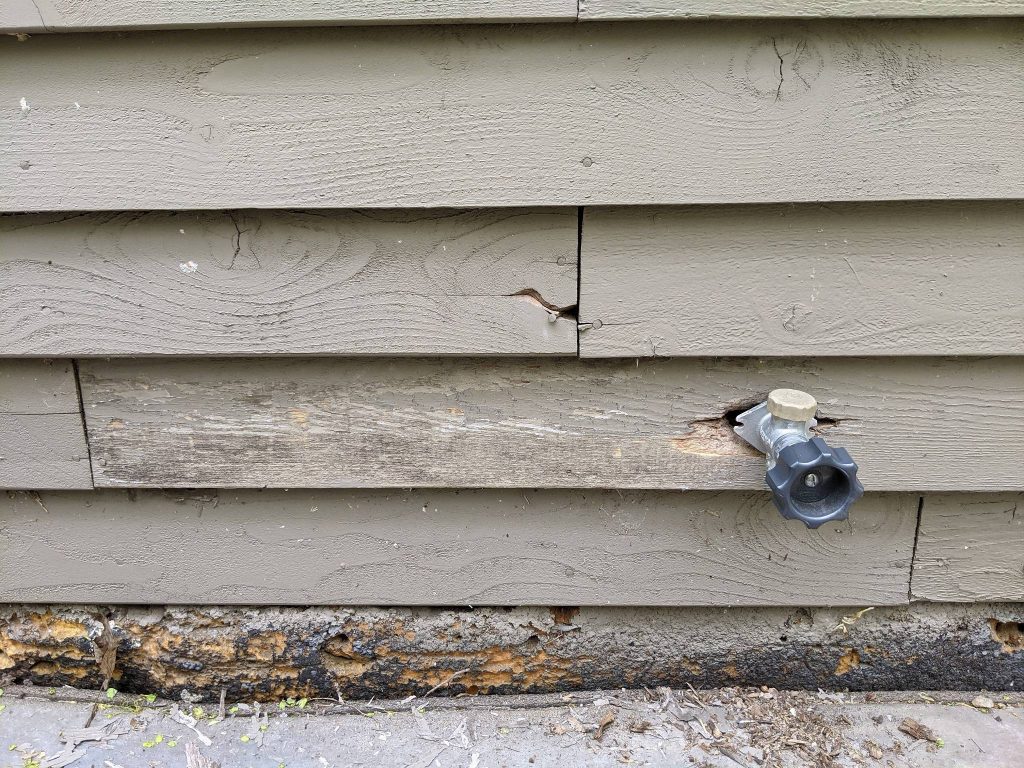
Rotten wood siding can cause more problems than most homeowners expect.
At first, it may look like a small soft spot, peeling paint, or a section of trim that seems worn from age. But once moisture gets into exterior wood, the damage can spread. What starts as a limited repair can grow into a larger siding issue if left unchecked for too long.
That is why learning to repair rotten wood siding is important before repainting a home’s exterior.
Painting over damaged wood does not stop decay. It only hides the issue for a short time. To achieve better results and a finish that lasts, the siding has to be repaired properly first. Once the damaged area is addressed and the surface is prepared properly, paint has a much better chance of bonding well and holding up over time.
This guide walks through what causes wood siding rot, how to tell whether repair is possible, when replacement makes more sense, and what needs to happen before the surface is ready for paint.
Why does wood siding start to rot
Wood rot does not happen on its own.
It usually begins when moisture is allowed to sit on or behind the siding for too long. Over time, repeated dampness weakens the wood fibers and breaks down the material.
Common causes include:
- failed caulking
- gaps around trim or joints
- poor drainage
- roof runoff
- clogged gutters
- splash-back near the base of the home
- cracked paint that lets moisture in
- siding installed too close to the ground
- repeated wet weather and humidity
- neglected exterior maintenance
Once water gets into the wood and stays there, the siding becomes vulnerable. The surface may soften first, then crack, split, swell, or crumble. In some cases, the rot stays near the surface. In others, it extends deeper into the board or reaches adjacent areas.
Anyone trying to understand how to repair rotten wood siding should start with the cause. If the source of moisture is not corrected, the repair may not last.
Common signs of rotten wood siding
Rotten wood siding is not always obvious right away.
In the early stages, it may look like normal paint wear or minor exterior aging. As the damage gets worse, the warning signs become easier to spot.
Look for signs such as:
- soft spots in the siding
- cracked or splitting boards
- peeling or bubbling paint in one repeated area
- dark staining
- swollen wood
- crumbling corners or edges
- boards that feel weak when pressed
- gaps opening around joints
- visible decay near windows, doors, or trim transitions
These problems often occur in areas that retain moisture longer than the rest of the home. Lower siding sections, edges near trim, and spots under rooflines are common trouble areas.
The sooner these signs are addressed, the better the chance that the repair can stay limited.
Why paint should never go over rotten siding
A fresh coat of paint may improve appearance for a short time, but it does not solve the real problem.
Rotten wood is already failing. That means the surface underneath the paint is weak, unstable, and often still holding moisture. Even if the paint looks good at first, it usually will not last.
Painting over rot can lead to:
- early peeling
- blistering
- cracking
- trapped moisture
- continued decay under the surface
- more expensive repairs later
This is one of the biggest reasons homeowners consider repairing rotten wood siding before repainting. The goal is not just to make the house look better. The goal is to create a solid, dry, stable surface that can actually hold a quality exterior finish.
The first step is finding out how bad the damage is
Not all rotten siding needs full replacement.
Some areas can be repaired if the damage is caught early and the surrounding material is still solid. Other sections are too weak or too far gone to save and should be replaced instead.
Before deciding which route makes sense, the damaged area should be checked closely.
Important things to look at include:
- how deep the rot goes
- whether the board is still structurally sound
- whether the nearby siding is also affected
- whether moisture is still getting into the area
- whether the rot is isolated or spreading
- whether the surrounding surface is strong enough to support a repair
This step matters because surface appearance alone can be misleading. A board may not look terrible from the outside, but once the loose paint is removed, the wood underneath may be much weaker than expected.
When rotten wood siding can usually be repaired
Repair is often possible when the damage is limited, and most of the board remains sound.
This may be true when:
- the rot is isolated to one section
- the board still has solid material around the damaged spot
- the surrounding siding is dry and stable
- the issue was caught before the wood broke down too deeply
- the moisture source can be corrected
In these cases, the damaged material may be removed, the area repaired, and the surface restored so it can be primed and painted.
Repair can be a good option because it preserves more of the existing siding and can help keep the project more focused. But it only works well when the repair is based on solid surrounding material.
That is the part that matters most.
A repair should not be built on wood that is still soft, damp, or breaking down.
When replacement is the better choice
Sometimes a repair is simply not enough.
Replacement makes more sense when the wood siding has lost too much strength or when the damage extends beyond one small area.
Replacement is often the better option when you see:
- deep rot through much of the board
- siding that crumbles easily
- large split sections
- rot along long stretches of board edge
- multiple damaged spots close together
- moisture damage that keeps returning
- adjacent boards are starting to fail, too
- siding that no longer holds its shape well
In these cases, trying to patch the damage can turn into a short-term fix that fails again later. Replacing the affected section creates a better base for prep and paint.
Anyone learning how to repair rotten wood siding should know that repair and replacement are both valid options. The key is choosing the one that gives the home a sound exterior surface rather than the one that only looks easier at first.
Areas where siding rot often starts
Exterior wood siding does not rot evenly.
Certain parts of a house are more vulnerable than others because they collect or direct more moisture.
High-risk areas often include:
Around windows and doors
These openings have joints, trim transitions, and caulk lines that can fail over time.
Near rooflines and gutter paths
Runoff can repeatedly wet the siding if water is not directed away properly.
Along the bottom edge of the siding
Splash-back from rain and ground moisture can affect lower boards.
Where siding meets trim
Small gaps in these transition points can let moisture enter.
On the shaded sides of the home
Areas that stay damp longer may dry more slowly after rain.
These are often the first places to inspect when figuring out how to repair rotten wood siding and prevent the same issue from coming back later.
How to repair rotten wood siding the right way
Once the problem area has been assessed and the moisture source has been addressed, the repair process can move forward.
The exact method depends on the condition of the siding, but the general approach follows a clear order.
1. Fix the source of moisture
This step comes first for a reason.
If water is still getting into the siding, even a well-done repair can fail. Caulking gaps, correcting runoff issues, improving drainage, or addressing other moisture-related problems should happen before the siding is finished.
2. Remove all failed material
Any loose paint, soft wood, crumbling sections, or visibly damaged material should be removed. The goal is to get back to stable wood.
Leaving decayed material behind weakens the repair and can allow the problem to continue under the surface.
3. Decide whether the area should be repaired or replaced
Once the damaged material is removed, the real condition becomes easier to judge.
If solid wood remains and the area is limited, repair may be possible. If the board is too far gone, replacement is usually the better move.
4. Restore the siding surface
For repairable sections, the damaged area should be rebuilt so the surface becomes sound and even again. For boards that need replacement, the new piece should be installed securely and aligned properly.
At this stage, the main objective is stability. The siding should feel solid, hold its shape, and present a clean base for finishing.
5. Sand and smooth the area
A repaired siding section should be blended into the surrounding surface as much as possible. Rough transitions, ridges, or uneven spots can show through the final paint job.
Sanding and shaping matter because paint tends to highlight flaws rather than hide them.
6. Prime the repaired section
Primer is an important step before painting exterior wood siding.
It helps seal the repaired area, supports paint adhesion, and creates a more even finish across old and new surfaces.
Skipping primer can lead to uneven absorption and a patchy final look.
7. Paint the siding once the surface is ready
Only after the siding is sound, dry, smooth, and primed should the paint be applied.
This gives the finish a much better chance of lasting and looking consistent across the repaired area.
Why prep matters so much before painting
Many siding problems that appear to be paint problems are actually surface issues.
If the wood beneath the coating is weak, damp, rough, or unstable, the paint will not perform the way it should. That is why prep work is such a major factor in the success of exterior painting.
When homeowners look up how to repair rotten wood siding, they often focus on the repair itself. But getting the siding ready for paint is just as important.
A paint-ready surface should be:
- dry
- stable
- free of loose material
- smooth enough to accept coating evenly
- properly primed
- protected from the moisture issue that caused the damage in the first place
Without those conditions, even good paint can fail too soon.
Repairing small sections vs. replacing full boards
This is a common decision point.
If the rot is limited to a small part of the siding and the rest of the board is still in good shape, a local repair may be enough. That can be a practical option when the damage is shallow and clearly contained.
But if the rot extends across more of the board, replacement often yields a cleaner, more dependable result.
Replacing a full board may make sense when:
- the damaged area is long or irregular
- the board has several weak spots
- the rot reaches the board ends
- the board no longer sits flat
- blending a patch would be difficult
The best approach depends on the siding’s actual condition rather than the desire to preserve every existing piece.
Common mistakes to avoid
There are several reasons rotten siding repairs fail early.
Many of them come back to skipping key prep steps or underestimating the extent of the damage.
Common mistakes include:
Painting over damaged wood
This only hides the issue temporarily.
Repairing without fixing the water source
If moisture continues to reach the siding, the problem usually returns.
Leaving soft wood behind
A repair needs firm material to hold up over time.
Rushing the surface prep
Even a solid repair can look poor if the area is not properly smoothed and primed.
Treating widespread damage like a small patch
When too much siding is failing, broader replacement may be the more reliable choice.
Avoiding these mistakes can make a major difference in how well the final paint job holds up.
How to tell when the siding is finally ready for paint
This is an important checkpoint.
Just because the repair is complete does not automatically mean the siding is ready for paint. The surface should be reviewed before moving to that final step.
The siding is generally paint-ready when:
- the damaged area has been fully repaired or replaced
- the cause of moisture has been addressed
- the wood feels solid and dry
- the surface has been sanded and smoothed
- all loose paint and debris are gone
- primer has been applied where needed
- the repaired section blends well with the surrounding areas
Once those conditions are met, the finish coat is much more likely to look uniform and last longer.
Why timing matters with exterior siding repair
Exterior work is always affected by conditions.
If the siding is repaired but painted before it is fully dry or properly prepared, the finish can suffer. Moisture, surface temperature, and weather all affect how well repair materials, primer, and paint perform.
That is why rushing the final stage is rarely a good idea.
A strong result depends on good repair work first and proper painting conditions after that.
What homeowners should keep in mind about long-term results
A siding repair is not just about fixing one damaged spot.
It is also about protecting the exterior from the same issue recurring. That is why long-term results depend on more than patching the visible damage.
To help the repair hold up, it is important to:
- keep gutters and drainage systems working properly
- maintain caulking where needed
- address peeling paint early
- watch for signs of repeated moisture exposure
- inspect vulnerable areas regularly
- repaint before the protective coating fails too far
These steps help reduce the chances of new rot starting in nearby areas after the repair is complete.
Knowing how to repair rotten wood siding is about more than fixing what looks bad from the outside.
It starts with understanding why the siding failed, how far the damage extends, and whether repair or replacement will yield better results for the home. Once the damaged wood is addressed properly and the moisture source is corrected, the siding can be smoothed, primed, and prepared for paint the right way.
That order matters.
Repair first. Prep second. Paint last.
When rotten wood siding is repaired correctly before painting, the finish has a stronger base, the home is better protected, and the exterior is more likely to stay in good shape longer.
A quality paint job depends on the surface underneath it.
That is why taking the time to repair rotten wood siding properly is one of the most important parts of exterior preparation.
FAQs
1. Can rotten wood siding be repaired instead of replaced?
Yes, in some cases. If the damage is limited and the surrounding wood is still solid, repair may be possible. If the rot is widespread or deep, replacement is often the better option.
2. Should I paint over rotten wood siding after scraping it?
No. Scraping loose paint does not fix the underlying damaged wood. Rotten siding should be properly repaired or replaced before painting.
3. What causes wood siding to rot most often?
Moisture is the main cause. Water intrusion from failed caulking, poor drainage, runoff, or aging paint can all lead to rot over time.
4. How do I know if siding is too damaged to repair?
If the board is soft, crumbling, badly split, or weak across a large section, replacement is usually more reliable than repair.
5. Does repaired wood siding need primer before paint?
Yes. Primer helps seal the repaired area, supports better paint adhesion, and improves the consistency of the final finish.

Shawn Zimmerman started painting in the summer of 1991, the year before he graduated high school. Shawn decided to pursue his career in the family business and continued to develop his skills in the trade while also developing the necessary skills to manage the business. Shawn enjoys being outdoors, canoeing, camping, hiking, hunting, fishing and spending time with family.