How Commercial and Industrial Coatings in Frederick, MD Protect High-Use Surfaces
March 30, 2026
When to Patch vs. Replace: How to Repair Drywall Ceiling Damage
April 14, 2026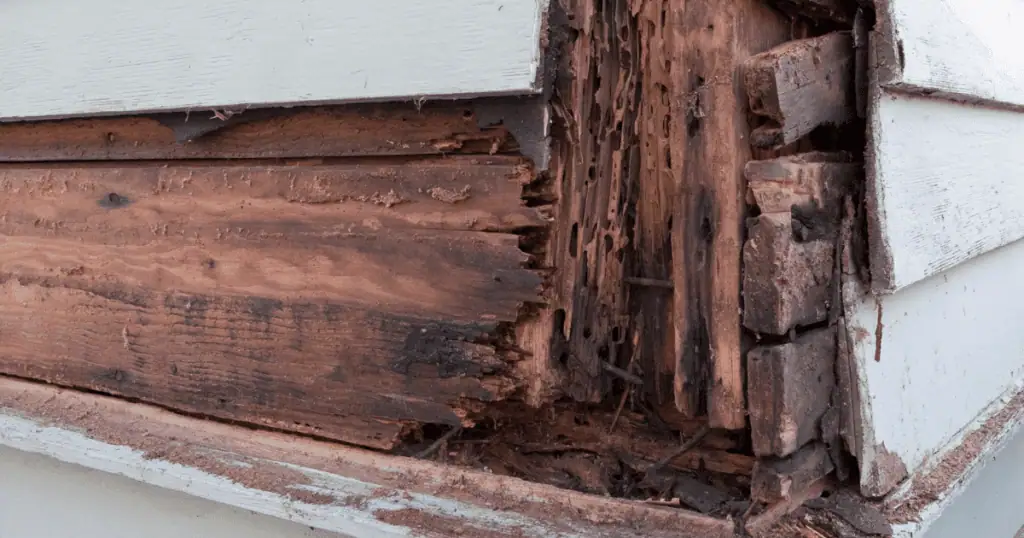
When exterior wood starts to rot, many homeowners hope a fresh coat of paint will cover the issue and buy a little more time. On the surface, that may seem like a quick fix.
It is not.
Painting over rotten wood does not stop the damage. It only hides it for a short time. The wood underneath is still weak, moisture is still present, and the new paint often fails much faster than expected. For homeowners dealing with trim, siding, fascia, soffits, porch parts, or window surrounds, this can turn a small repair into a much larger project.
That is why rotten wood repair in Frederick should be done before exterior painting begins. Frederick Painting offers residential rotten-wood repair in Frederick, and its exterior painting services are built on strong prep work and lasting finishes.
If you are wondering what really happens when paint is applied over damaged wood, here is what you need to know.
Paint does not bond well to rotten wood
Paint needs a stable, dry, sound surface.
Rotten wood is none of those things.
As wood decays, its fibers lose strength. The surface may feel soft, crumbly, or uneven. Even if you scrape away loose paint and add a new coat, the material below is still breaking down. That means the paint is bonding to a failing surface rather than solid wood.
The result is usually short-lived.
You may see the finish look acceptable for a brief period, but it often starts to blister, crack, or peel much sooner than it would on properly repaired wood. Exterior painting requires proven prep methods and paint-ready surfaces, as surface condition directly affects how well a finish lasts.
Moisture stays trapped where the problem started
Wood rot does not appear for no reason.
In most cases, moisture has been getting into the wood over time. That moisture may come from rain exposure, failed caulking, clogged gutters, roof runoff, leaking joints, or repeated damp conditions around trim and siding.
If you paint over rotten wood without fixing the damaged section, you do not remove the moisture source. In some cases, you make the problem harder to notice because the surface now looks sealed and fresh from the outside.
Meanwhile, water can continue to work below the coating.
That trapped moisture can spread the damage more seriously into the board or into nearby areas. A section that could have been repaired early may later need partial replacement or broader reconstruction. Addressing minor damage early helps prevent larger repair issues from developing.
The damage often spreads beyond what you can see
One of the biggest risks with painting over rot is false confidence.
The wood may look better once it is painted, so it is easy to assume the problem is handled. But visible surface damage is often only part of the issue. Rot can continue around joints, along board edges, behind trim, and near window or door openings.
This is why a repair-first approach matters.
A proper inspection helps identify whether the damage is isolated or whether nearby wood has also been affected. It also helps uncover the reason the area failed in the first place. Without that step, the new paint can hide warning signs until the wood becomes even weaker.
For many Frederick homes, that matters because exterior surfaces are exposed to humid summers, winter moisture, and changing seasonal conditions that can be hard on unprotected wood.
Your new paint job may fail much faster
Most homeowners repaint to make their home look better and stay protected longer.
But when paint is applied over rotten wood, the coating often does not perform as it should.
Instead of getting a durable finish, you may see:
- bubbling paint
- early peeling
- soft spots returning
- cracking at seams and corners
- repeated staining or discoloration
- boards that keep deteriorating under the surface
That means the money spent on painting does not go as far as it should. You may need touch-ups, repairs, or repainting far sooner than expected.
A strong paint job is only as good as the surface below it. Prep work is a major part of long-term results, and ignoring rot weakens the entire project.
Rotten wood can weaken trim, siding, and structural details
Not every piece of rotten wood is structural, but all rotten wood is a concern.
Exterior trim boards, fascia, soffits, porch posts, door frames, and window surrounds all help shield your home from water intrusion. When those areas soften or break down, they are no longer doing that job well.
A painted-over board may still look finished from the curb. But underneath, it can continue losing strength.
That creates several problems. Gaps may widen. Caulk joints may fail. Water may reach deeper layers. Nearby surfaces may start to swell or deteriorate. In more advanced cases, adjoining materials can also be affected.
This is one reason rotten wood repair in Frederick is not just about appearance. It is also about keeping the outside of the home sealed and protected before painting begins.
Rot around windows and doors can become especially costly
Windows and doors are common trouble spots.
These openings have seams, joints, trim transitions, and caulk lines that are exposed to repeated moisture. Once wood rot starts here, painting over it can create a short-term cosmetic improvement while the real issue continues behind the finish.
That can lead to:
- soft exterior trim
- failed caulking
- water getting behind the frame area
- harder-to-open or close components if moisture damage grows nearby
- larger repair scopes later
If the damage is caught early, repairs are usually more manageable. If it is ignored and painted over, the area often worsens until replacement becomes more likely.
You may end up paying twice
This is one of the most frustrating outcomes for homeowners.
First, there is the cost of painting over the problem.
Then, once the rot becomes visible again or the paint starts failing, there is the cost of going back, removing damaged sections, repairing or replacing wood, and repainting the area.
In other words, trying to save money up front can lead to more expenses later.
Repair first. Paint second. That order helps protect the finish, the wood, and the value of the work.
Common signs you should not ignore before painting
Homeowners sometimes assume wood is still paintable because it is not completely falling apart. But rot can show up in earlier ways too.
Look for signs like:
- wood that feels soft when pressed
- cracked or split trim that stays damp
- bubbling or peeling paint in one repeated area
- boards with dark staining or discoloration
- caulk lines that keep opening up
- corners that crumble during prep
- trim that looks swollen or uneven
If any of these are present, it is worth having the area checked before painting. A better-looking finish starts with knowing whether the wood underneath is still solid.
Why proper prep matters so much in Frederick homes
Homes in Frederick experience weather changes throughout the year, and exterior materials take the brunt of them.
Rain, humidity, heat, winter freeze-thaw cycles, and normal aging all affect paint and wood surfaces over time. That is why prep work matters so much. When surfaces are cleaned, damaged material is addressed, and repairs are made before paint is applied, the finish has a much better chance of lasting.
Durable finishes depend on proven preparation methods and repair work designed to protect homes long term. Surface prep is not a side step in the job. It is one of the main reasons the final result holds up.
What should happen instead of painting over rot?
A better process usually looks like this:
1. Inspect the damaged area carefully
The first step is to identify how far the damage extends and what caused it.
2. Remove or repair failed wood
Depending on the severity, the wood may need repair, section replacement, or full replacement of a damaged board or trim piece.
3. Correct the moisture source
If caulking, flashing, gutter flow, or other water-related issues caused the problem, those should be addressed as part of the process.
4. Prepare the surrounding surface
Once the wood is sound, the area can be cleaned, sanded, patched as needed, and primed correctly.
5. Apply paint to a stable surface
Now the coating has a much better base, which helps with appearance and durability.
This is why rotten wood repair in Frederick should be considered part of paint preparation, not a separate issue to put off until later.
Repair vs. replacement: what determines the right move?
Homeowners often ask whether rotten wood can be repaired or must be replaced.
That depends on how deep the damage goes.
If the problem is limited and caught early, repair may be possible. If the wood has lost too much strength, replacement is often the better path. The goal is not just to make the surface look acceptable. The goal is to restore a sound base for long-term performance.
That decision is best made after the damaged section is evaluated closely. The key point is that either option is still better than putting paint over a failing surface and hoping it holds.
Why does this matter for curb appeal, too
Many homeowners view rotten wood as a repair issue only.
But it is also a curb appeal issue.
Fresh paint on damaged wood rarely lasts long. Once peeling, cracking, or swelling starts to show, the home can look neglected even if the paint job is recent. On the other hand, when repairs are handled first, the finished result looks cleaner, sharper, and more consistent.
For homeowners who care about appearance, resale readiness, or protecting the outside of the home, the best-looking result is usually the one built on sound prep.
The value of working with a local team that handles both repair and painting
When exterior painting and wood repair are treated as connected parts of the same job, the process is often smoother, and the result is more dependable.
Frederick Painting offers both residential rotten wood repair in Frederick and exterior painting services in Frederick, which means homeowners can address damaged wood and move into paint preparation with the same local company. That combination matters because it helps avoid the common mistake of making the home look better before the surface is actually ready.
So, what happens if you paint over rotten wood in Frederick homes?
At first, it may look like the problem is gone.
But underneath the new paint, the wood is still damaged. Moisture can stay trapped. Rot can continue spreading. The finish may fail early. And what could have been a smaller repair can become a larger, more expensive project later.
That is why the smarter route is to handle the damaged wood first.
When rotten wood repair in Frederick is done before painting, the finish has a better foundation, the home is better protected, and the result is more likely to last. For homeowners planning exterior work, repairing rot is not an extra step. It is one of the most important steps.
FAQs
1. Can I paint over slightly rotten wood?
It is not a good idea. Even if the damage seems minor, paint does not solve the underlying issue. The wood should be checked and repaired first so the finish has a stable surface to adhere to.
2. How can I tell if exterior wood is rotten or just old?
Soft spots, crumbling corners, swelling, repeated peeling, and dark staining are common warning signs. Old wood may look worn, but rotten wood usually feels weak or damaged.
3. Is rotten wood repair necessary before exterior painting?
Yes. If rot is present, repairing it first helps prevent early paint failure and further moisture damage. This is why rotten wood repair in Frederick should come before most exterior painting work.
4. What parts of a home are most likely to have wood rot?
Common areas include window trim, door trim, fascia, soffits, siding edges, porch parts, and anywhere water tends to sit or enter through joints.
5. Will new paint stop wood rot from spreading?
No. Paint may temporarily cover the appearance, but it does not remove damaged material or fix the moisture source. The rot can continue beneath the surface if the wood is not repaired.
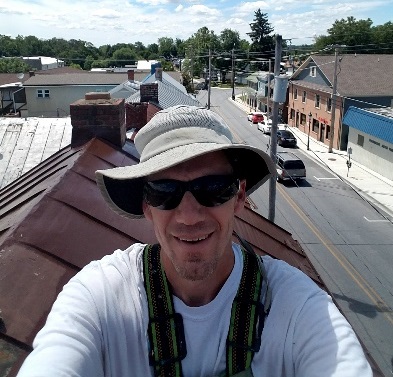
Shawn Zimmerman started painting in the summer of 1991, the year before he graduated high school. Shawn decided to pursue his career in the family business and continued to develop his skills in the trade while also developing the necessary skills to manage the business. Shawn enjoys being outdoors, canoeing, camping, hiking, hunting, fishing and spending time with family.