
Best Season to Paint Interior Walls in Frederick, MD (With Humidity, Heating & AC Tips)
December 16, 2025
How Often Should You Repaint Interior Walls in a Frederick, Maryland Home?
December 30, 2025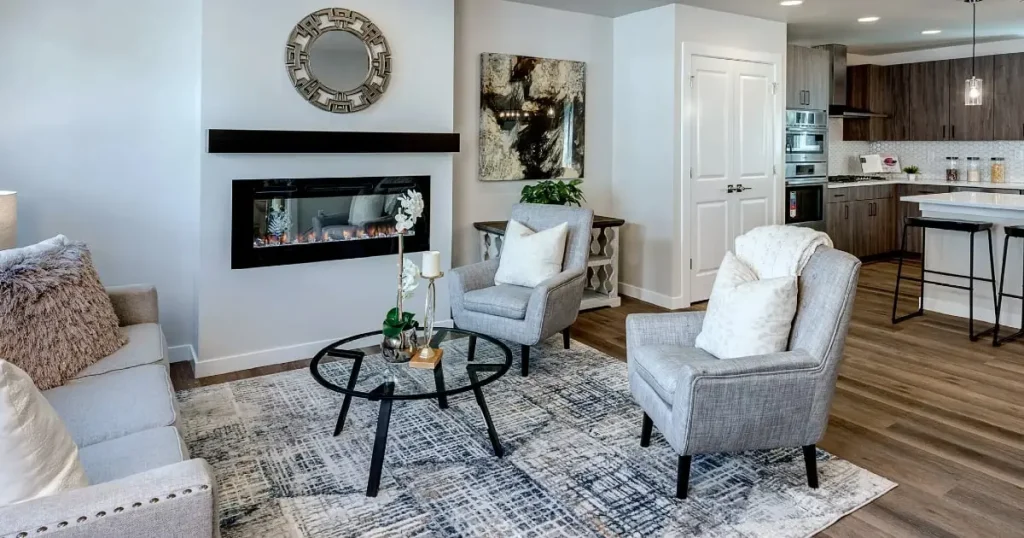
Small Frederick townhomes have a lot going for them—walkable neighborhoods, efficient layouts, and low maintenance—but narrow rooms and long hallways can feel tight. With the right interior paint strategy, you can add visual width, height, and continuity so spaces read airy and open year-round. Use this skimmable guide to plan colors, finishes, and layouts that work beautifully in Frederick and the surrounding counties of Washington, Carroll, Howard, and Upper Montgomery.
If you want help mapping colors to your floor plan, our team can sample, paint, and tidy with minimal disruption. See our residential painting services to get started.
The fast take: make rooms read wider, taller, calmer
- Keep the contrast between walls, trim, and ceilings low to remove visual “edges.”
- Use light, warm-leaning neutrals in tight spaces; save deeper colors for targeted focal walls.
- Extend one continuous color through connected rooms to stretch sightlines.
- Use satin/semigloss on doors/trim for gentle light bounce; matte/eggshell on walls to hide minor texture.
- Pull the ceiling color down onto the walls (2–4 inches) as a “ceiling band” to make the room feel taller.
- Paint interior doors the same color as walls (satin) in narrow halls to make doors “disappear.”
The townhome layout problem (and how paint fixes it)
Townhomes stack function vertically with long rectangles: entry → living → dining → kitchen → back door, plus a linear stair. Paint can relieve this “bowling alley” effect by:
- Soften edges (low-contrast schemes)
- Push walls outward (lighter mid-values with warm undertones)
- Anchor view lines (strategic, deeper accents at the ends of sightlines)
- Unify height (continuous or lifted ceiling treatments)
Palette framework for narrow rooms
Base wall color (70–80% of the home):
Choose a warm, light neutral—think creamy off-white, warm greige, or putty-beige. These hues bounce light without feeling stark, especially in Frederick’s overcast winters. Aim for a light reflectance value (LRV) in the 70–82 range.
Trim/doors:
Match the wall color in satin for a low-contrast envelope, or choose a soft white that’s only 1–2 steps lighter than the walls. Avoid icy whites that make walls look dingy.
Ceilings:
Use soft white in flat, or the wall color lightened 25–50% to keep the room cohesive and airier.
Accents (10–20% of the home):
Moody mushroom, olive-warm, clay/terracotta, or smoky denim as focal moments. Keep accents sparse and place them to pull the eye lengthwise.
Color moves that expand space (simple and repeatable)
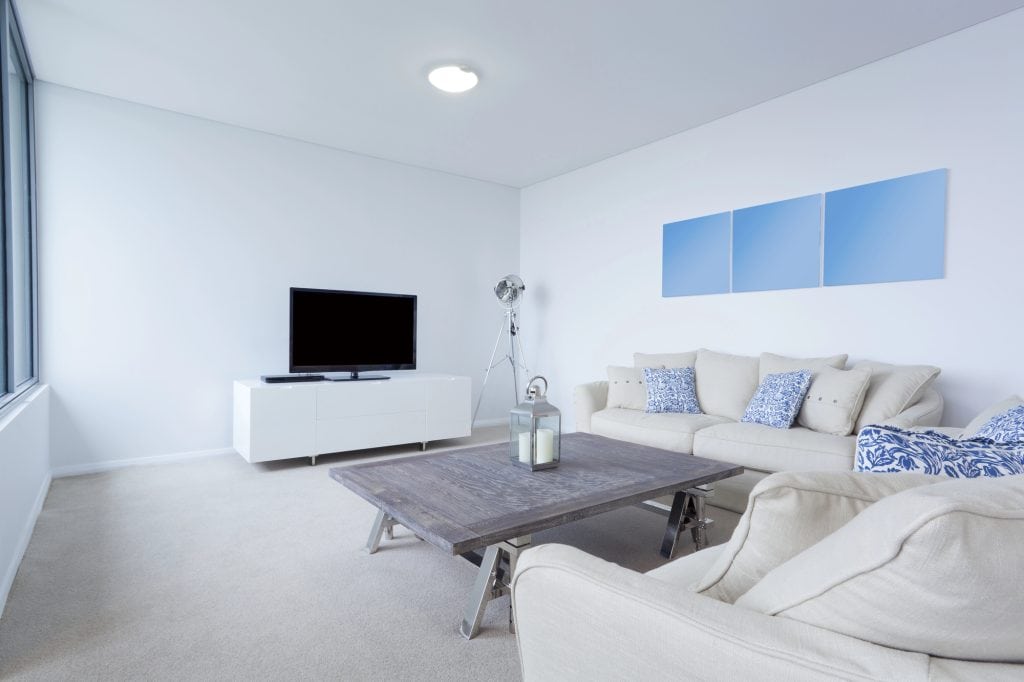
- One color, many rooms: Carry the same wall color through the living, dining, and the first-floor hall. Rooms read as a single larger zone.
- Tone-on-tone trim: Paint baseboards, door casings, and even doors the same color as the walls in satin. The disappearance of outlines adds inches visually.
- Raised ceiling effect: Paint a 2–4 inch ceiling band (ceiling color down onto the wall). The eye assumes more height.
- Short-wall brightening: In a long rectangle, keep short end walls slightly lighter (or reflective artwork) so the room doesn’t tunnel.
- Vertical stretch: Use soft vertical stripes, or board-and-batten painted the same color as the wall (subtle, not high-contrast) to add height.
- Continuous hall color: Run the hall color right up the stairs; avoid color breaks on landings so the stairwell feels taller and cleaner.
Specific ideas for typical small-townhome rooms
Entry/Foyer (often narrow and windowless)
- Wall color: warm off-white or light putty.
- Trim/doors: match walls in satin to reduce visual clutter.
- Ceiling: wall color lightened 25–50%.
- Trick: Paint the inside face of the entry door the same color as the walls so it recedes into the background.
Living room (long rectangle)
- Wall color: warm greige carried from entry.
- Feature: a subtle focal wall behind the sofa, 2–3 steps darker than the walls (mushroom or cocoa).
- If the room feels short, accent the farthest wall lightly to pull the eye forward, not the TV wall.
Dining “pass-through”
- Keep the same wall color as the living room for flow.
- Add warmth with tonal wainscot painted the same hue as the walls in satin (just a sheen change).
- A slender, soft white ceiling band keeps the space lifted over the table.
Kitchen (adjacent to dining)
- If the cabinets are white, use mushroom or warm putty on the walls to avoid a clinical feel.
- Keep the backsplash contrast modest; a mid-tone tile close to the wall color avoids chopping up the small footprint.
Powder room (tiny but impactful)
- Go moody (cocoa, olive-warm, or clay). Small rooms can handle depth, adding surprise without shrinking the main spaces.
- Use satin on walls for wipe-ability; soft white ceiling to keep it from feeling too tight.
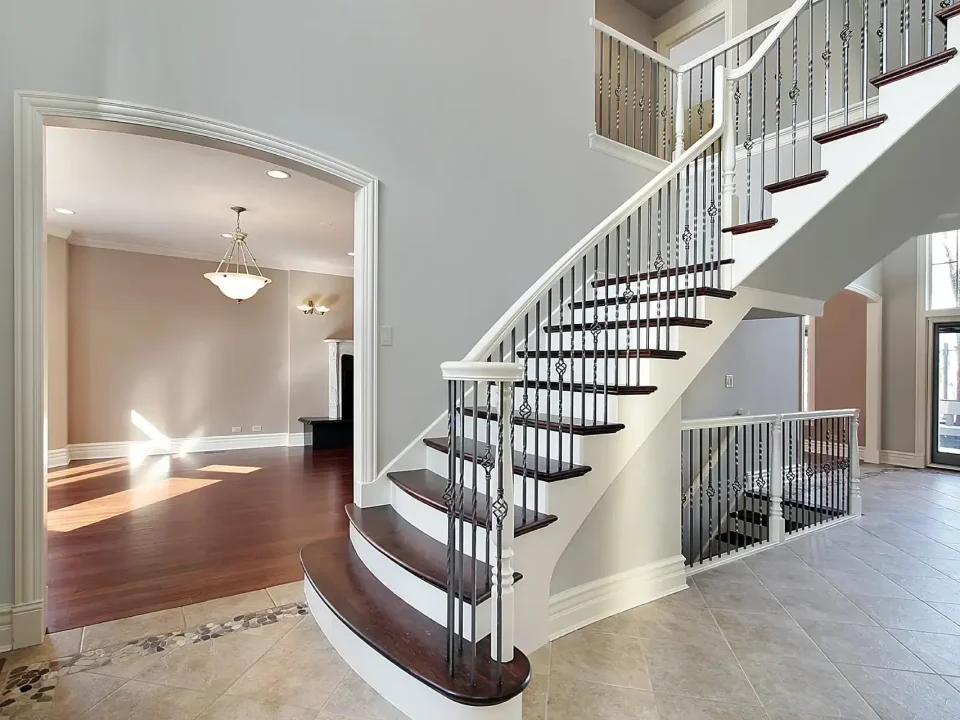
Stairwell (tall, contiguous planes)
- Run the same wall color from the entry to the second-floor hall.
- Paint handrails a gentle contrast (soft black/bronze), but keep spindles the wall color to reduce “visual pickets.”
Bedrooms (modest footprints)
- Primary: smoky teal or warm mushroom for a cocoon effect; trim same color, satin.
- Secondary/guest: creamy off-white walls with a single darker headboard wall to add depth without shrinking.
Basement rec room
- Avoid cool grays. Use cream or warm beige and a layered lamp light.
- If the ceiling is low, paint exposed ductwork the same color as the ceiling to minimize visual noise.
Light, sheen, and finish—small-space best practices
- Matte/eggshell for walls: hides minor roller overlap and drywall texture.
- Satin for trim/doors: subtle glow that bounces light down narrow halls.
- Flat ceilings: reduce glare and help ceilings recede.
- Use 2700–3000K LED bulbs; cooler 4000K+ casts can make small rooms feel sterile.
- Opt for low-odor, low-VOC paints so you can keep windows closed while maintaining consistent HVAC—ideal for multi-story townhomes.
The “three-neighbor” rule for easy coordination
Pick one main neutral and two neighbors (one slightly lighter, one slightly darker) from the same color strip. This gives you a built-in system for:
- Main floor walls: the main neutral
- Accent or short walls: the darker neighbor
- Ceilings or small niches: the lighter neighbor (or main neutral lightened 25%)
Everything matches because the undertones align, so the rooms read calm and cohesive.
Five small-space paint illusions that really work
- Camouflaged doors: Doors painted wall color vanish in narrow halls; swap shiny knobs for warm metal levers to keep things streamlined.
- Shadow control: Fill nail pops and caulk trim gaps so lamp light doesn’t create micro-shadows that make planes look busier.
- Low-contrast art frames: Choose wood/bronze frames that match the wall color—art floats rather than chopping walls into pieces.
- Shelf color matching: Built-ins painted wall color keep lines sleek; style with mid-tone objects for depth.
- Floor line lift: If baseboards are chunky, matching them to walls (satin) eliminates the dark line at the floor that visually shortens walls.
Color + layout pairings you can copy this weekend
Open First Floor Flow
- Walls: warm greige (LRV 72–76)
- Trim/Doors: same hue, satin
- Ceiling: same hue lightened 25–40%
- Accent: mushroom behind the sofa or dining niche
Bright & Airy Narrow Hall
- Walls: creamy off-white
- Doors: same color, satin (disappear)
- Handrail: soft black/bronze
- Ceiling band: 3″ downpaint for height
Modern Cozy Townhome
- Walls: putty-beige
- Trim: soft white 1–2 steps lighter
- Accent: olive-warm on a far short wall
- Metals: brass or antique bronze
Undertones: your make-or-break detail
Undertones decide if a “neutral” looks cozy or cold. In Frederick’s winter light, cool grays can skew blue. Test swatches on two walls (one gets daylight, one gets lamplight). Tape a pure white card beside your swatch to reveal hidden yellow, red, or green undertones before you commit.
Sampling strategy that fits townhome schedules
- Paint 12×12 swatches in the living room, hallway, and one bedroom.
- Check morning, midday, and evening with lamps—your real-life lighting.
- Decide in 48 hours so the eye doesn’t acclimate and stall your project.
- If you’re coordinating with new furniture or cabinets, place samples beside those finishes, not just on blank walls.
Sheen map for small spaces (easy to live with)
- Walls: eggshell in high-traffic areas (halls, stairs); matte where you want an ultra-soft look (bedrooms).
- Trim/doors: satin or semigloss for scuff resistance and wipe-ability.
- Built-ins: satin (same color as walls to reduce edges).
- Ceilings: flat (or wall color lightened).
When to use darker colors (without shrinking rooms)
- Powder rooms can go rich—clay, cocoa, smoky denim—because they’re contained boxes.
- Focal planes at the end of a long sightline can be 2–3 steps darker to “anchor” the view and make the space behind feel more expansive.
- Bedroom headboard walls add depth while adjacent walls stay light.
Maintenance that keeps small spaces looking larger
- Wipe high-touch zones monthly (switch plates, door frames).
- Maintain your HVAC filters (MERV 11–13) to cut dust nibs in paint.
- Use felt pads on the bench and the shoe racks near entries—less trim scuffing means fewer distracting touch-ups.
- Keep humidity around 40–50% in winter so paint films cure strongly and look uniform.
Planning a quick, low-disruption project
- Phase rooms: living/dining first, then hall/stairs, then bedrooms—your home stays usable.
- Hold HVAC steady (68–72°F; 40–50% RH) for smooth curing and consistent sheen.
- Light ventilation in bursts between coats rather than open windows all day.
- Coordinate with our crew for furniture protection and clean daily wrap-ups so narrow rooms don’t feel chaotic mid-project.
Ready to make your townhome feel taller, wider, and calmer? Our crew uses low-odor coatings, neat protection, and precise cut lines so the transformation feels instant. Explore residential painting to schedule a quick walkthrough.
FAQs
What color makes a narrow room look wider?
A light, warm neutral with low contrast to trim/ceiling visually erases edges, so walls read farther apart. Keep accents minimal and placed at the ends of sightlines.
Should I paint doors and trim the same color as my walls?
Yes—especially in small halls. Matching in satin removes visual outlines, making the corridor feel cleaner and longer.
Can I use dark colors in a small townhome?
Absolutely, in targeted ways: powder rooms, headboard walls, or the far short wall in a long room. Keep surrounding walls light.
What sheen works best for small spaces?
Eggshell on walls balances wipe-ability and softness; satin on trim/doors adds a subtle glow; flat on ceilings keeps them receding.
How do I test undertones in Frederick’s winter light?
Place swatches on two walls, view under daylight and lamps, and keep a white card beside the swatch to reveal hidden warmth or coolness.

Shawn Zimmerman started painting in the summer of 1991, the year before he graduated high school. Shawn decided to pursue his career in the family business and continued to develop his skills in the trade while also developing the necessary skills to manage the business. Shawn enjoys being outdoors, canoeing, camping, hiking, hunting, fishing and spending time with family.